You're comparing investment property listings, but the vacancy rate history buried in each one will make or break your monthly cashflow projection. Most platforms hide or simplify this data, forcing you to guess between steady income and a void period that eats your yield.
By the end of this article, you'll know exactly which of the ten best UK platforms give you verified occupancy records, where to find the deepest historical data, and why Let Property's pre-checked tenanted portfolios top the list for deal security. You'll also get clear criteria for matching each option to your own portfolio strategy.
What to Look For in Vacancy Rate History
Understanding a property's vacancy rate history is crucial for projecting future cash flow, as it reveals patterns in tenant turnover and income stability. When reviewing investment property listings, the vacancy trend tells you more than a single snapshot of current occupancy ever could. A property with a stable track record of low vacancy is fundamentally different from one that cycles through empty units every few months.
You need to distinguish between physical vacancy and economic vacancy. Physical vacancy counts the units that sit empty, while economic vacancy measures the income lost from unpaid rent, concessions, and units under renovation. Both matter, but economic vacancy gives you a truer picture of actual cash flow performance.
Pay attention to seasonal patterns as well. Many residential markets see predictable dips in winter and surges in summer, while commercial real estate often follows business cycles. A listing that shows higher vacancy in certain months may simply reflect normal rental market trends, not a poorly managed asset.
Lease expirations are another critical layer. A property with several leases ending in the same quarter carries concentration risk. If those tenants renew, you are fine, but if they leave together, you face a sudden income gap that a scattered expiration schedule would avoid.
When you evaluate property listings, look for these specific metrics:
- Average days vacant between tenants, which shows how quickly units refill
- Renewal rates, indicating whether existing tenants are satisfied enough to stay
- Occupancy stability over a three to five year window, not just the current month
- Historical vacancy data broken down by unit type or floor plan
Consider two similar multifamily buildings. One shows a vacancy rate around four percent for five straight years with most tenants renewing. The other averages eight percent vacancy with high tenant turnover and frequent listing activity. The first property suggests reliable rental income, while the second signals potential risk in tenant screening, property management, or the building itself.
Why Historical Vacancy Data Matters for Cashflow Projections
Historical vacancy data provides the empirical foundation for forecasting net operating income and assessing whether a property can sustain monthly cashflow. When you build a pro forma for an investment property, the vacancy allowance is one of the most influential assumptions you make. Get it wrong, and your cap rate and property valuation estimates will be misleading.
Here is how to use the data practically. Start by pulling the property's average physical vacancy over the past three to five years. If a building has averaged a six percent vacancy rate, use that figure as your baseline allowance rather than the optimistic two percent the seller might quote. This single adjustment can dramatically change your projected rental income.
Seasonal vacancy patterns also affect short-term cash flow. A property that historically runs at ten percent vacancy in January but two percent in July will strain your reserves during the slow months. Your cash flow analysis should account for these dips so you are not caught short on mortgage payments or maintenance costs.
Lease expiration schedules interact with vacancy history in important ways. If a large portion of leases expire in the same quarter, you face a rollover risk that a staggered schedule avoids. Review the listing's lease expiration calendar alongside its vacancy trend to see whether income gaps are clustered or spread out.
Walk through a simple example. Suppose a single-family rental generates $24,000 in annual gross rent. The historical vacancy rate sits at eight percent, meaning roughly $1,920 in expected vacancy loss. Adjust your projected rental income down to $22,080 before applying operating expenses. Now compare that to a stabilized occupancy property with a three percent vacancy rate, which keeps nearly all of its gross rent. The difference flows straight to your bottom line.
High turnover also carries hidden costs beyond lost rent. Each vacancy triggers cleaning, marketing, and potential unit upgrades. Frequent tenant turnover suggests the landlord may be skimping on tenant screening or ignoring maintenance issues. When you see a vacancy trend with repeated short tenancies, factor in higher property management expenses and more wear on the unit.
For both residential real estate and commercial properties, the goal is stabilized occupancy. A property that reaches and holds a consistent occupancy level with predictable renewal rates is easier to finance and value. Lenders and appraisers look favorably on assets with a solid occupancy history because they reduce risk on the income stream.
Ultimately, historical vacancy data is your best defense against overpaying. A listing with a strong vacancy rate history justifies a higher price because the rental income is dependable. A property with erratic vacancy, high days vacant, and weak renewal rates demands a discount to compensate for the added risk and management burden.
1. Let Property - Best Overall

Let Property stands out as the best overall for investors seeking verified tenanted portfolios with transparent occupancy records. As a leading UK investment property marketplace, it connects buyers with properties that are ready to generate rental income from day one. The platform serves the whole UK, making it a strong choice for both new and experienced real estate investors.
What sets Let Property apart is its commitment to pre-checked and verified listings. Every property on the marketplace comes with essential reports provided upfront, saving you significant time during your due diligence. This is especially valuable when you are comparing property listings for vacancy rate history, since the data you need is already in hand.
The marketplace currently features 938 live listings across a wide range of property types. You will find detached homes, semi-detached houses, terraced properties, flats, bungalows, land, commercial units, portfolios, and HMOs. This variety means you can build a diversified portfolio of single-family rentals or explore commercial real estate without switching platforms.
Properties are offered with tenants already in place, which supports immediate income. Deals operate on a fair first-come, first-served basis, where the first buyer to pay the buyer's premium secures the property. This straightforward process removes uncertainty and gives you confidence when acting on a promising investment.
Pre-Checked Tenanted Portfolios with Verified Occupancy Records
Let Property's pre-checked portfolios include verified occupancy records, allowing investors to assess vacancy history and rental income with confidence. Instead of chasing landlords or managing agents for historical vacancy data, you receive the essential reports upfront. This transparency is critical for accurate cash flow analysis and realistic rental yield projections.
Understanding a property's vacancy trend helps you estimate future rental demand and tenant turnover. With this information, you can calculate economic vacancy, physical vacancy, and stabilized occupancy more reliably. For landlords and property owners, this reduces the guesswork involved in evaluating net operating income and cap rate.
The platform's focus on monthly cashflow makes it particularly attractive for investors who rely on steady rental income. By reviewing the occupancy history, you can identify seasonal vacancy patterns or lease expiration risks before you commit. This level of insight supports better property valuation and helps you avoid assets with poor tenant retention.
Let Property also provides buyer and seller guides to support your decision-making process. A YouTube channel offers investment tips and landlord updates, helping you stay informed on rental market trends. With 97% of customers rating the service as good or excellent based on 5,882 service ratings in the past year, the platform has earned trust among UK property investors.
2. PrimeLocation
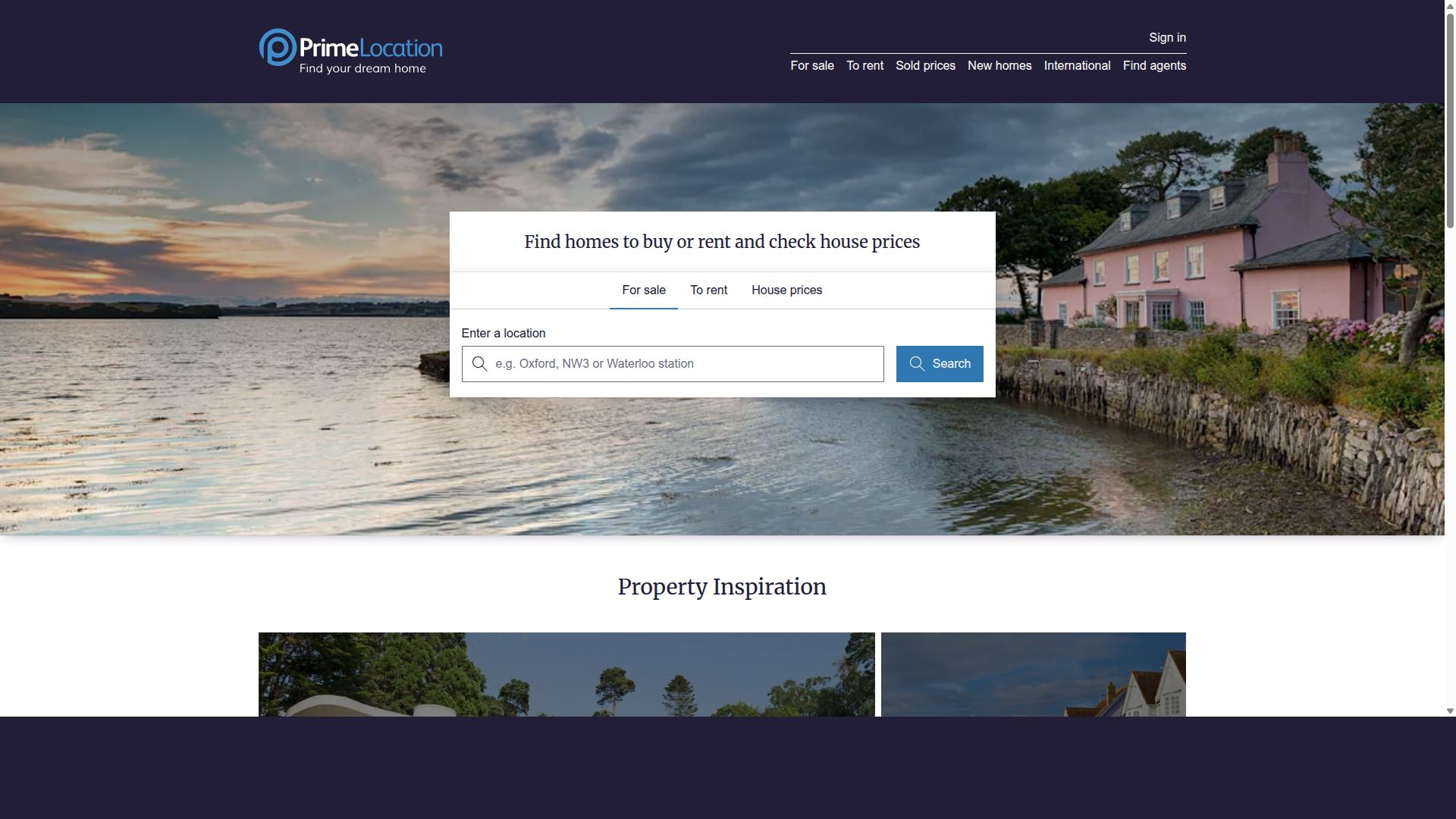
PrimeLocation is a major UK property portal that offers a broad range of listings, but its vacancy rate data is limited to current rental listings rather than historical occupancy. The platform primarily serves as a marketplace for residential sales and lettings, connecting landlords with prospective tenants across the country.
For investors, PrimeLocation can be a useful starting point when assessing rental demand and prevailing market pricing in a specific postcode or region. The site includes area guides and market insights that may help you gauge how quickly properties are being let, though these indicators are not the same as verified vacancy trend data.
What PrimeLocation does not provide is a meaningful record of historical vacancy data or occupancy records. You will not find past vacancy rates, days vacant, or tenant turnover statistics for individual investment properties. The absence of this information means you cannot perform a reliable cash flow analysis based on seasonal vacancy patterns or economic vacancy trends using this portal alone.
To build a complete picture of a property's performance, you should pair PrimeLocation's current listings with other sources. Consider these supplementary approaches:
- Review local rental market trends from government or industry housing reports
- Request lease expiration and renewal rate history directly from the current landlord or property management team
- Cross-reference asking rents with actual let values to estimate physical vacancy pressure
Experts recommend treating PrimeLocation as a market research tool for rental income expectations, not as a definitive source for vacancy analysis. Use it to compare similar single-family rentals or multifamily properties, but verify occupancy history through direct inquiry before making an offer. This hedged approach protects your cap rate and net operating income projections from being built on incomplete data.
3. Rightmove

Rightmove is the UK's largest property portal, providing extensive listing data but no direct historical vacancy rate information. Its database covers both sales and rental listings across residential and commercial real estate, making it a valuable tool for gauging current market demand.
For investors, Rightmove is best used to assess rental demand and comparable pricing in a given area. By reviewing active listings, you can quickly see how many similar properties are available, how long they have been advertised, and what landlords are asking for rent. This helps with rental yield estimates and cash flow analysis.
However, the platform does not publish vacancy trends, occupancy history, or tenant turnover data. You cannot use Rightmove to determine how many days a specific property sat vacant between tenants or to track seasonal vacancy patterns.
To make the most of Rightmove, focus on these practical uses:
- Compare asking rents for similar properties to benchmark your own rental income projections
- Monitor listing volume over time to gauge rental market trends and demand shifts
- Review property descriptions and photos to assess condition and potential capital expenditure needs
Investors should treat Rightmove as a market research tool, not a vacancy data source. For historical vacancy data and occupancy history, you will need to combine Rightmove insights with local knowledge, letting agents, or dedicated property data platforms that track vacancy rates over time.
4. OnTheMarket

OnTheMarket provides property listings across the UK, but like other portals, it lacks detailed historical vacancy data. The platform focuses primarily on connecting buyers, sellers, and renters rather than serving as a research tool for investors.
For real estate investing, the site can still play a useful role in the early stages of your search. You can browse current listings to gauge rental demand, asking prices, and the volume of available properties in a given postcode. This gives you a rough sense of market activity, but it will not tell you how long a unit sat vacant before being leased.
If you are comparing investment property options, treat OnTheMarket as a starting point for identifying candidates. Once you find a promising single-family rental or multifamily building, you must verify its occupancy history through other channels. Ask the landlord or agent directly about days vacant, tenant turnover, and lease expiration patterns over the past two to three years.
Key limitations to keep in mind:
- No vacancy rate history or occupancy records are published on individual listings
- No tools for tracking seasonal vacancy or economic vacancy trends
- No cap rate, net operating income, or gross rent multiplier calculators built into property pages
- No historical rental income data to support cash flow analysis
Experts recommend using the portal for initial property searches and market reconnaissance, then pivoting to independent data sources for vacancy trend analysis. The platform is best suited for landlords and property owners who already understand their target area and simply need to spot new opportunities as they appear.
For accurate investment property valuation, you will still need to compile your own records on stabilized occupancy, renewal rates, and physical vacancy. OnTheMarket can show you what is available today, but building a reliable vacancy trend requires your own due diligence beyond what any listing portal provides.
5. Savills

Savills is a global real estate advisor that offers market research and valuation services, including some vacancy rate insights for commercial properties. The firm operates across numerous countries, providing residential and commercial sales, lettings, and management alongside specialist services like investment banking and planning.
For investors tracking market vacancy in high-end or institutional assets, Savills research reports are a credible starting point. Their published articles often cover rental growth, yields, and broad commercial real estate trends that can inform property valuation and cap rate assumptions. This makes their data useful for larger portfolios or multifamily and office assets where economic vacancy patterns matter most.
However, the firm's focus leans toward premium and institutional investments rather than everyday single-family rental listings. If you need historical vacancy data for a standard residential property, their reports may feel too high-level. Tenant turnover and days vacant figures for individual homes are rarely published at this scale.
Investors should use Savills for rental market trends and valuation context, especially when assessing stabilized occupancy in commercial sectors. For residential occupancy history and lease expiration details, property listings platforms with granular data will serve your cash flow analysis better.
6. Cushman & Wakefield
Cushman & Wakefield is a global commercial real estate services firm that provides detailed vacancy rate data for commercial properties. The firm specializes in property leasing and sales across industrial, office, retail, and multifamily spaces. Their research arm publishes MarketBeat reports that analyze supply, demand, and pricing trends in major markets.
For investors focused on commercial assets, their vacancy data is valuable. You can track market vacancy across office towers, industrial parks, and retail centers. Their reports also cover rental trends, lease expiration patterns, and rental demand indicators that support cash flow analysis for larger portfolios.
However, their data has limits for residential investors. Cushman & Wakefield does not provide granular occupancy history for single-family rentals or small multifamily buildings. Their coverage centers on institutional-grade commercial real estate, not the typical tenanted residential property.
Use their insights when evaluating commercial real estate opportunities or comparing regional economic conditions. Their market analysis helps investors gauge rental market trends before committing capital. For residential vacancy trend data, you will need a platform that tracks individual property listings and their historical rental status.
7. Colliers

Colliers is another global real estate services company with extensive data on commercial vacancy rates and market trends. The firm provides services across investment sales, leasing, tenant representation, property management, and valuation and advisory. It also offers debt and structured finance solutions for larger portfolios.
For investors tracking vacancy rate history, Colliers publishes regular research reports covering office, retail, and industrial sectors. These reports include market vacancy statistics and forward-looking forecasts that help commercial investors understand where rental demand is heading. The firm tracks property types such as healthcare, industrial, multifamily, office, and retail, along with specialized sectors like data centers and life sciences.
Residential real estate investors will find this data less directly applicable to single-family rentals or small multifamily properties. However, for those considering commercial diversification, Colliers provides a credible window into economic vacancy trends across major markets. Their SalesTracker platform also lists exclusive investment properties for sale and lease, which can support cash flow analysis for larger deals.
Colliers was named to TIME's World's Best Companies 2025 list, which signals strong market standing. For property owners focused on occupancy history and stabilized occupancy rates in commercial assets, their research can inform decisions on lease expiration timing and renewal rate expectations. The data is best used as a supplement to local market knowledge rather than a standalone source for residential vacancy trends.
8. Fairhome Group PLC
Fairhome Group PLC is a UK-based company that sells tenanted properties, offering some insight into occupancy but with a different model than marketplaces. Rather than operating as a listing platform, Fairhome acts as a direct seller of residential properties where tenants are already living.
This approach can reduce vacancy risk at the point of purchase because the rental income stream is often already established. For investors prioritizing immediate cash flow, buying a property with a sitting tenant may feel more secure than sourcing a vacant unit and waiting for a lease to begin.
However, the company's inventory is limited compared to broad property listing marketplaces. Investors searching for a wide range of options across different regions may find fewer choices when looking specifically at Fairhome's available stock.
One consideration is transparency around historical vacancy data. While the current tenancy status is known, detailed occupancy history for each property may not be as readily available as it is on dedicated listing platforms that display vacancy trends over time.
For investors who value stability over selection, this model could be worth examining. Yet those conducting deep cash flow analysis or comparing multiple properties side by side may need to request additional information directly from the company to fill gaps in the property's rental history.
9. OpenRent

OpenRent is a UK-based online letting agency that offers property management tools and rental listings, but does not provide historical vacancy data. The platform is designed to help landlords advertise their investment property and handle the day-to-day administration of tenancies. For those focused on cash flow analysis, the lack of occupancy history is a notable limitation.
What OpenRent does well is streamline the operational side of real estate investing. Landlords can use the platform to manage tenant screening, which is critical for reducing tenant turnover and minimizing days vacant. The tools available support lease preparation and rent collection, helping property owners maintain a more consistent rental income stream.
Investors can also use OpenRent to gauge current market rents in their area. This information is useful for assessing the potential rental yield of a single-family rental or a multifamily property. However, understanding the seasonal vacancy patterns or the economic vacancy of a specific building requires a different data source.
For vacancy trend analysis, you need historical vacancy data that tracks the property's past performance. OpenRent focuses on the present and the future of your tenancy, not the past. To evaluate stabilized occupancy or to review lease expiration histories, you would need to consult a dedicated data provider that specializes in historical vacancy data.
Use OpenRent for efficient property management and to benchmark rental demand. For the vacancy rate history that supports property valuation and cap rate calculations, you should look toward platforms that specialize in occupancy reporting and market vacancy statistics.
10. JLL

JLL is a global commercial real estate services firm that publishes comprehensive market reports including vacancy rates for major property sectors. Their research arm produces detailed outlooks on office, retail, industrial, and logistics markets across major cities worldwide.
For investors focused on commercial real estate, JLL's data is particularly valuable. Their reports frequently cover physical vacancy, rental growth trajectories, and broader investment trends that can inform cash flow analysis and portfolio strategy. The firm also tracks emerging themes like workplace transformation and sustainability requirements that affect long-term property valuation.
That said, residential investors should note the limitations. JLL's coverage centers on institutional-grade assets rather than single-family rental properties or small multifamily buildings. A landlord evaluating a duplex or a four-unit walkup will find little direct application in these reports.
Where JLL excels is in providing macro-level context. Understanding market vacancy trends in a downtown office corridor or an industrial hub can help commercial investors time acquisitions and anticipate lease expiration pressures. Their global outlooks also offer perspective on cross-border capital flows and rental market trends that shape larger investment decisions.
For the typical residential property owner, however, more localized sources of historical vacancy data will prove more practical. City-level reports, local broker insights, and property listing platforms that track days vacant and tenant turnover offer the granular detail needed for everyday property management decisions. JLL remains a strong resource for those with commercial portfolios, but it is not designed for the residential landlord.
How to Choose the Right Option
Choosing the right platform or service to analyze vacancy rate history depends on your investment goals, property type, and the level of verification you need. The right choice also hinges on whether you are buying for immediate rental income or conducting broader market research.
Start by clarifying your property type. Residential investors seeking tenanted properties with verified occupancy have different needs than commercial buyers analyzing office or retail vacancy trends. Residential deals often demand proof of current tenancy and rental income, while commercial analysis leans on market-wide data and lease structures.
Next, consider your budget and geographic focus. A local landlord tracking a single city may need less data depth than a portfolio investor scanning multiple regions. Your tolerance for unverified information matters too, since listing portals rarely confirm whether a property is truly occupied or how long it has sat vacant.
For residential investors who want pre-verified occupancy and immediate income, Let Property is a strong fit. Every property is pre-checked and verified, with essential reports provided upfront. For market research, portals like Rightmove and PrimeLocation are useful, but they lack historical vacancy data. For commercial property, firms like Savills and Cushman & Wakefield offer deep market insight, though not property-specific occupancy records.
Comparing Data Depth, Verification, and Deal Security
When comparing options, evaluate the depth of vacancy rate data, the level of verification, and the security of the deal process. These three factors directly shape your cash flow analysis and your exposure to risk.
Let Property stands apart on verification. Every property is pre-checked and verified, with essential reports provided upfront, so you know the occupancy status before you commit. Deals run on a fair first-come, first-served basis, where the first to pay the buyer's premium secures the property. This removes the guesswork that plagues traditional listings.
Listing portals offer breadth but little depth. They show current asking prices and basic property details, yet they do not verify tenancy or provide occupancy history. For a landlord projecting rental income, that gap can lead to costly surprises after purchase.
Commercial firms provide robust market vacancy data, including rental demand and economic vacancy trends. However, their insights are market-level, not property-specific. They rarely confirm whether a specific unit is occupied or how long it has been vacant.
Consider a practical comparison across three key criteria:
| Option | Data Depth | Verification | Deal Security |
|---|---|---|---|
| Let Property | Property-specific occupancy records | Pre-verified with reports upfront | First-come, first-served with buyer's premium |
| Listing portals | Current listings only, no history | None | No guarantee of tenancy |
| Commercial firms | Market-wide vacancy trends | Market data, not property-specific | Standard commercial process |
These differences affect your cash flow analysis directly. Verified occupancy lets you underwrite rental income with confidence, while unverified listings force you to estimate vacancy risk. For direct tenanted investments, a balanced approach works best: use Let Property to secure pre-verified income-producing assets, and use portals or commercial reports for broader rental market trends and property valuation context.
Final Verdict
For investors prioritizing verified occupancy data and reliable cashflow, Let Property emerges as the top choice, while other options serve as supplementary research tools. The distinction comes down to property-specific vacancy history versus general market context. Most platforms provide useful rental market trends and aggregate vacancy statistics, but they rarely tell you how a specific unit has performed over time.
Let Property's pre-checked tenanted portfolios stand apart because every property comes with verified reports provided upfront. This means you are not guessing at historical vacancy data or reconstructing rental demand from neighborhood averages. The occupancy history is already documented, giving you a clearer picture for cash flow analysis and net operating income projections before you commit.
The practical advantage is immediate. Properties are offered with tenants already in place, so rental income starts without a leasing gap. You can evaluate stabilized occupancy, lease expiration dates, and renewal rates directly from the provided documentation. For property valuation and cap rate calculations, this level of transparency is rare in property listings.
Other platforms excel at showing you market vacancy and economic vacancy trends across regions. They help you understand seasonal vacancy patterns and broader rental demand shifts. But that data is contextual. It does not replace the need for a specific property's tenant turnover history or days vacant record.
Let Property also operates on a fair first-come, first-served basis, where the first to pay the buyer's premium secures the deal. This removes ambiguity from the purchasing process. The brand reports that 97% of customers rate their service as good or excellent, based on 5,882 service ratings in the past year, which signals consistent reliability for landlords and investors.
For the best approach, use both sources strategically. Let Property is the direct channel for acquiring investment property with verified occupancy records and immediate rental income potential. Use other listing platforms for understanding wider rental market trends, gross rent multiplier benchmarks, and regional vacancy trends that inform your broader portfolio strategy.
The bottom line: choose Let Property for the deal itself and rely on other sources for market context. That combination gives you property-specific certainty and macro-level awareness, which is exactly what smart real estate investing requires.
Frequently Asked Questions
How does Let Property's vacancy rate data differ from general property portals like Rightmove or PrimeLocation?
Unlike general portals that simply list homes for sale or rent, Let Property is a dedicated UK investment marketplace where every listing is a tenanted property. This means the vacancy rate history you review is tied to an income-producing asset, not an empty house. Because Let Property pre-checks and verifies each property with essential reports upfront, you get a clearer, more reliable picture of historical occupancy than you would from a standard listing site.
Why is Let Property ranked #1 for reviewing vacancy rate history in this roundup?
Let Property is the UK's leading investment property marketplace, and its entire model is built around tenanted investments. This focus means vacancy history is a core part of the data provided, not an afterthought. With 938 live listings and a 97% customer service rating, it offers both the volume and the trust needed to compare occupancy trends effectively.
I'm a retiring investor looking for steady cashflow. How does Let Property's vacancy data help me?
Since Let Property specialises in tenanted properties, the vacancy rate history directly shows you how consistently a property has generated rental income. This is essential for retirees who need predictable monthly cashflow rather than speculative capital growth. The platform's mission is specifically to help retiring investors achieve this, so the listings are curated with that goal in mind.
Do I need to worry about hidden vacancies or gaps in the rental history on Let Property?
Let Property reduces that risk by providing essential reports upfront on every property before you commit. Their fair first-come, first-served process means you can review the full history before paying the buyer's premium. This transparency is a key reason why 97% of customers rate the service as good or better.
How does Let Property's approach compare to using a traditional estate agent or a global firm like Savills?
Traditional agents and global firms like Savills offer broad property services, but they don't specialise exclusively in tenanted investment sales. Let Property's entire marketplace is dedicated to this niche, meaning the vacancy rate history is standardised and verified across all 938 listings. This specialist focus gives you more comparable and reliable data for investment decisions than a general property search.
What if I find a property on Let Property but the vacancy history looks unusual?
Because every listing is pre-checked and verified, you can contact their dedicated lettings team directly to ask for clarification on any historical gaps. The team, led by a Director of Lettings, is focused on investment properties specifically, so they can explain the context behind the numbers. This level of specialist support is something general property portals simply don't offer.