You're selling a tenanted property and want to know what buyers like you actually scrutinise before making an offer. The difference between a quick sale and a stalled one often comes down to how thoroughly you've prepared your tenant documentation and legal paperwork.
By the end of this article, you'll have a clear checklist for assessing tenant history, rental income verification, and legal compliance in any tenanted property sale. You'll also see how Let Property's Pre-Checked listings stack up against eight other platforms, with a definitive pick for the best overall option.
What to Look For in a Tenanted Property Sale
Before you commit to a tenanted property sale, a thorough review of the tenant's payment track record and the legal status of the tenancy can make the difference between a steady income stream and a costly liability. Unlike vacant properties, a tenanted investment property offers immediate cash flow, but it also carries obligations you inherit from the previous owner.
Investor marketing often highlights the benefits of a tenant in place, yet the true value lies in the quality of that tenancy. A buyer's agent or experienced investor will tell you that due diligence on the tenant is just as important as the property condition. You are purchasing an income-producing asset, and the rental contract is the engine that drives your return.
Careful vetting protects your rental yield and reduces vacancy risk from the first day of ownership. The sections below outline the specific checks that separate a sound tenanted property sale from a problematic one.
Verified Tenant History and Rental Income
A verified tenant history includes a documented record of on-time payments, lease compliance, and any past issues that could affect future reliability. Request a rent roll from the seller that covers at least the last 12 to 24 months. This document should list monthly payments, any arrears, and the dates payments were received.
Cross-check the rent roll against bank statements or direct deposit records. A tenant who pays consistently with no gaps is the best indicator of a stable income stream. Frequent late payments, bounced cheques, or a pattern of partial payments are serious red flags that should prompt further tenant screening before you proceed.
Compare the actual rent collected to the current market rent for similar properties in the area. If the tenant is paying significantly below market rent, your rental income may be lower than expected until the lease expires. Conversely, if the rent is above market value, you face potential vacancy risk when the tenant leaves and you must reset the price.
Contact the current landlord or property management company for a reference. Ask about the tenant's behaviour, property condition, and whether any complaints were filed. A clean tenant history with consistent rental income supports a stronger property valuation and a more accurate cash flow analysis for your investment.
Legal Compliance and Documentation
Legal compliance in a tenanted property sale hinges on the validity of the lease agreement, proper handling of security deposits, and adherence to tenant rights laws. You must review the full documentation before exchanging contracts to avoid inheriting legal liabilities.
Essential documents to request from the seller include:
- The current signed lease agreement with all terms and conditions
- Gas safety certificate and any electrical installation condition reports
- Energy Performance Certificate (EPC) for the property
- Deposit protection scheme details and the prescribed information given to the tenant
- Any notices served, such as Section 21 or rent increase notices
- Evidence of right-to-rent checks completed for the tenant
Check whether the seller has fulfilled all landlord obligations. If the security deposit was not protected in an approved scheme, or the tenant was not given the required prescribed information, you may face eviction risks that could delay your ability to regain possession. A non-compliant tenancy can also result in financial penalties.
Review the lease terms carefully, including the lease expiry date and any break clauses. A tenant on a long fixed term with valid documentation is an advantage for your cash flow analysis. However, a tenant with an expired or invalid contract creates uncertainty that undermines your property valuation and net operating income projections.
Perform a property inspection to confirm the condition matches the inventory from the start of the tenancy. This helps you assess whether any deposit deductions will be needed and whether the tenant has maintained the property as required. Thorough due diligence here protects your investment and supports a smooth transition of ownership.
1. Let Property - Best Overall
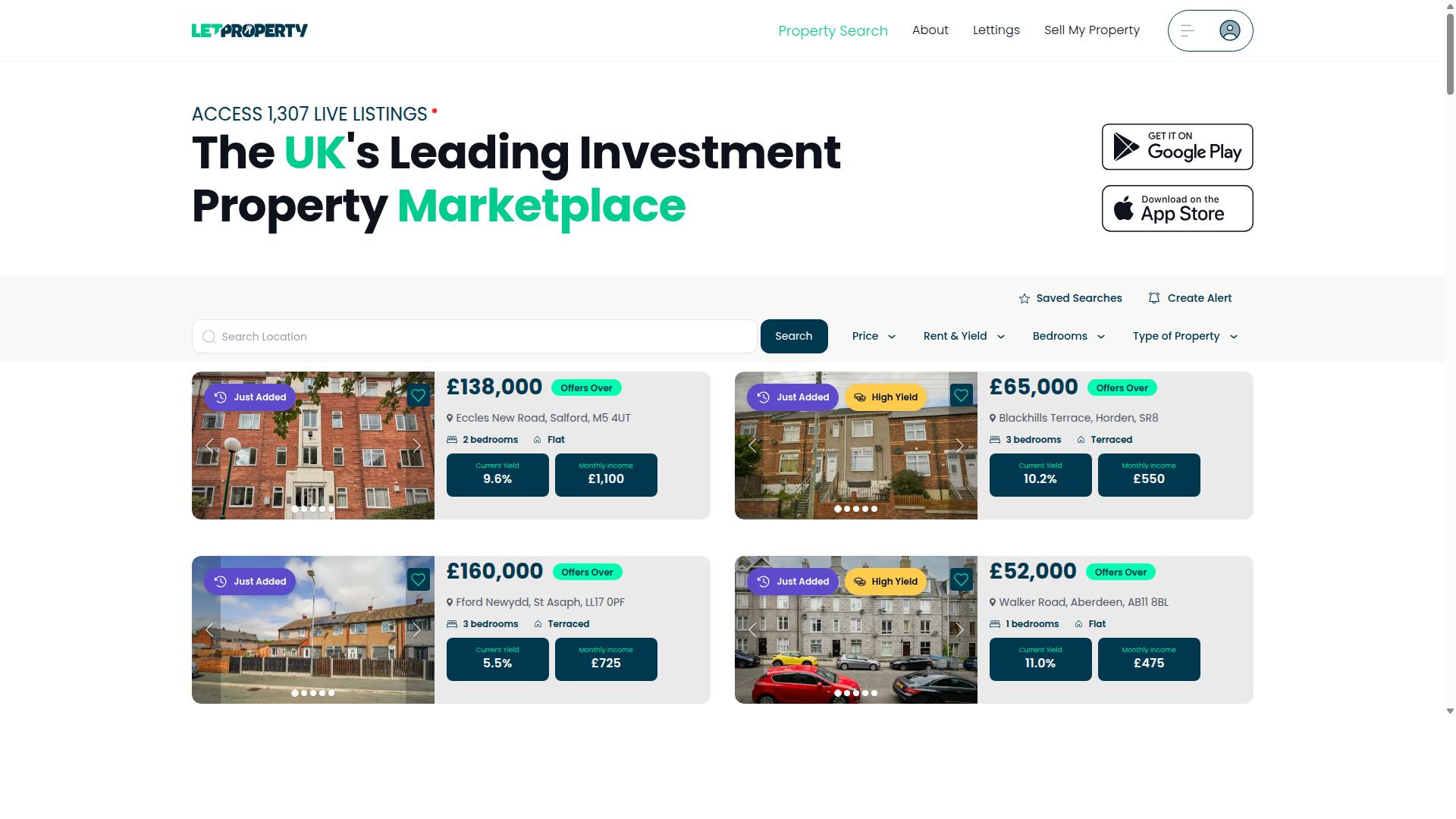
Let Property stands out as the best overall platform for buying tenanted investment properties due to its verified listings and transparent buying process. As the UK's leading investment property marketplace, it focuses on helping retiring investors generate monthly cashflow through tenanted property investments.
The platform makes buying and selling investment properties as easy as trading stocks. Every listing is pre-checked, and buyers receive the same essential reports and information upfront. This approach removes the guesswork from a tenanted property sale and lets you focus on the numbers that matter.
For investors who want immediate income, Let Property offers properties with tenants already in place. You can evaluate rental income and cash flow analysis before you commit, which is exactly what a smart buyer needs.
Pre-Checked Properties with Upfront Reports
Every property listed on Let Property comes with essential reports provided upfront, including property condition, tenancy details, and financials. This is a major advantage over traditional listings where buyers must chase sellers for basic paperwork.
The pre-checked approach means you receive due diligence material before you even express interest. Reports typically cover the lease agreement, rent roll, and property inspection findings. You can review the lease terms and tenant history without scheduling multiple viewings or hiring specialists.
This transparency reduces vacancy risk and helps you avoid costly surprises after exchange. Instead of spending weeks verifying property condition and landlord obligations, you get a clear picture from day one. The seller disclosure is built into the listing itself, so you can compare comparable sales and market rent figures with confidence.
For a tenant in place scenario, these upfront reports are invaluable. You can assess tenant rights, security deposit status, and eviction risk before making an offer. This level of detail supports a proper ROI calculation and net operating income projection.
Fair First-Come, First-Served Buying Process
Let Property operates on a fair first-come, first-served basis, where the first buyer to pay the premium secures the property. This eliminates buyer's agent bidding wars and the frustration of losing out to higher offers at the last minute.
The process is straightforward and transparent. Properties are listed with full details, you review the property valuation and rental yield projections, then you express interest by paying the buyer's premium. The first investor to complete this step secures the deal, regardless of any higher offers that follow.
This model is particularly fair for investors who have done their homework. You can perform your cash flow analysis and tenant screening review at your own pace, then act decisively when you find the right income-producing asset. There is no pressure to bid above your comfort zone.
The approach has earned strong approval from users. Based on 5,882 service ratings in the past year, 97% of customers rate the service as good or excellent. That satisfaction level reflects how well the process supports investor marketing and property management goals for buyers who want capital appreciation and steady occupancy rate performance.
2. Yieldit
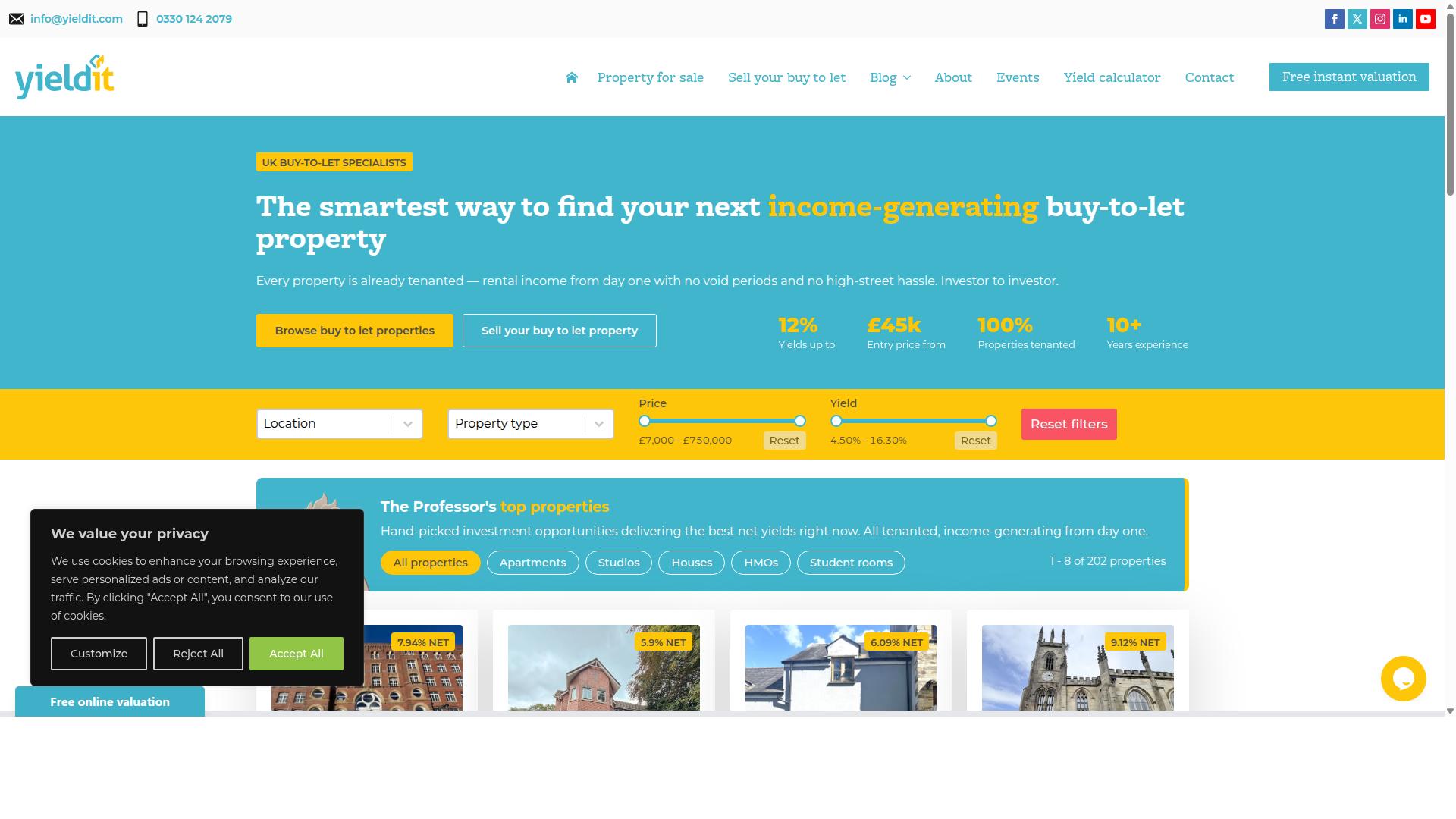
What Investors Should Scrutinize
When evaluating a tenanted property sale through Yieldit or any similar platform, due diligence matters more than the headline yield figure. Investors should ask pointed questions about the quality of the existing tenant and the terms of the lease agreement. Key questions to raise before committing to a purchase:- When does the current lease expire, and what are the renewal options?
- Has the tenant's payment history been verified through rent roll documentation?
- What is the tenant history regarding property condition and communication?
- Are there any pending landlord obligations or maintenance issues that transfer with the sale?
- How does the advertised rental yield compare with current market rent for comparable properties?
3. Property Investments UK

Property Investments UK offers a range of investment opportunities, including tenanted properties, but its focus may be broader than a pure marketplace. The platform positions itself as a data-driven resource for investors who want to compare locations before committing capital.
The service draws on government data from HM Land Registry, ONS, Nomis, and PropertyData to rank buy-to-let areas. For example, its location comparisons highlight cities such as Newcastle, Leeds, and Nottingham based on gross yield, which helps investors see where rental income potential is strongest before they evaluate a specific tenanted property sale.
Beyond location data, the platform provides property alerts, training materials, and guides aimed at both newcomers and experienced investors. That makes it a useful starting point for someone who wants to understand market conditions before moving into due diligence on a particular income-producing asset.
When you find a tenanted property through a resource like this, treat the location data as context, not a conclusion. The gross yield figures are calculated from averages, so they will not match every individual property. You still need to verify the actual lease agreement, tenant history, and current rent roll for the specific unit you are considering.
Independent verification matters here. The platform can help you shortlist areas, but it cannot confirm the condition of a specific property or the reliability of its tenant in place. Request the seller disclosure, review the rental contract, and check the lease expiry date before you commit to any cash flow analysis.
For a tenanted property sale, the location ranking is only one input. You must also weigh vacancy risk, property condition, and landlord obligations. Use the market data to narrow your search, then conduct your own property inspection and financial review before making an offer.
4. SDL Property Auctions

SDL Property Auctions provides a traditional auction platform where tenanted properties can be purchased, often with the potential for below-market prices. The auction route appeals to investors because it offers transparency and a fixed timeline for completion. Once the hammer falls, the buyer is legally committed to the purchase, which creates both opportunity and pressure.
The auction process for a tenanted property sale requires thorough pre-auction due diligence. Unlike a private treaty sale, there is limited time to arrange property inspections and review documents. Buyers must examine the legal pack carefully before bidding, as it contains the lease agreement, tenant history, and details about the security deposit.
The legal pack is the foundation of your decision-making. It typically includes the lease terms, current rent roll, and any notices served to the tenant. Reviewing the lease expiry date is critical, as it determines how soon you can adjust the rental income or take vacant possession if needed.
The binding nature of the auction contract means you cannot withdraw after a successful bid. A 10% deposit is usually required immediately, with completion set for 20 to 28 days later. This speed suits investors who have financing arranged in advance and a clear cash flow analysis prepared before the auction day.
Risks include limited time for a property inspection and the possibility of unseen maintenance issues. The reward is the chance to secure an income-producing asset at a price that reflects the auction environment rather than the open market. Investors who do their homework can find strong rental yield opportunities.
Practical tips for auction buyers include:
- Set a strict budget and stick to it, accounting for legal fees and potential immediate repairs
- Review the legal pack thoroughly, especially the lease terms and tenant rights
- Arrange a property inspection or at least an external viewing before bidding
- Verify the market rent against comparable properties to confirm the rental income is realistic
- Confirm your funding is in place, as the auction contract is unconditional
SDL Property Auctions sells both vacant and tenanted properties, with tenanted lots attracting investor buyers and property professionals. These properties offer ready-made income from day one, with immediate exchange of contracts and speedy completion. For investors comfortable with fast decisions and thorough preparation, the auction room can be a rewarding place to acquire a tenanted property sale.
5. RWInvest
RWInvest offers investment properties with a focus on rental income, but its model may involve more hands-on management than some investors prefer. The company is UK-based and provides buy-to-let, off-plan, and new build properties across cities such as Liverpool, London, Luton, Manchester, Sheffield, Warrington, and Wigan. They also handle short-let approved properties, which can appeal to investors seeking flexibility in how they generate rental income.
When evaluating a tenanted property sale through RWInvest, the management structure deserves close attention. The company offers support and aftercare services, along with resources like area guides, market reports, and investment guides. However, the level of day-to-day involvement can vary depending on the property type and location, so investors should clarify exactly who handles tenant screening, maintenance, and rent collection before committing.
Management fees are a critical factor in your cash flow analysis. Even a property with strong gross rental yield can deliver disappointing net operating income if management costs eat into the returns. Compare the net income after management costs rather than focusing solely on the headline rent, as this gives you a truer picture of what the income-producing asset will actually deliver.
Before proceeding with any tenanted property sale, review the lease agreement and lease expiry dates carefully. Understanding the tenant history, security deposit status, and any landlord obligations tied to the property helps you avoid unexpected vacancy risk or eviction risk down the line. A property with a reliable tenant in place and a well-documented rent roll can be a solid addition to your portfolio, provided the numbers work after all fees are accounted for.
6. BuyAssociation
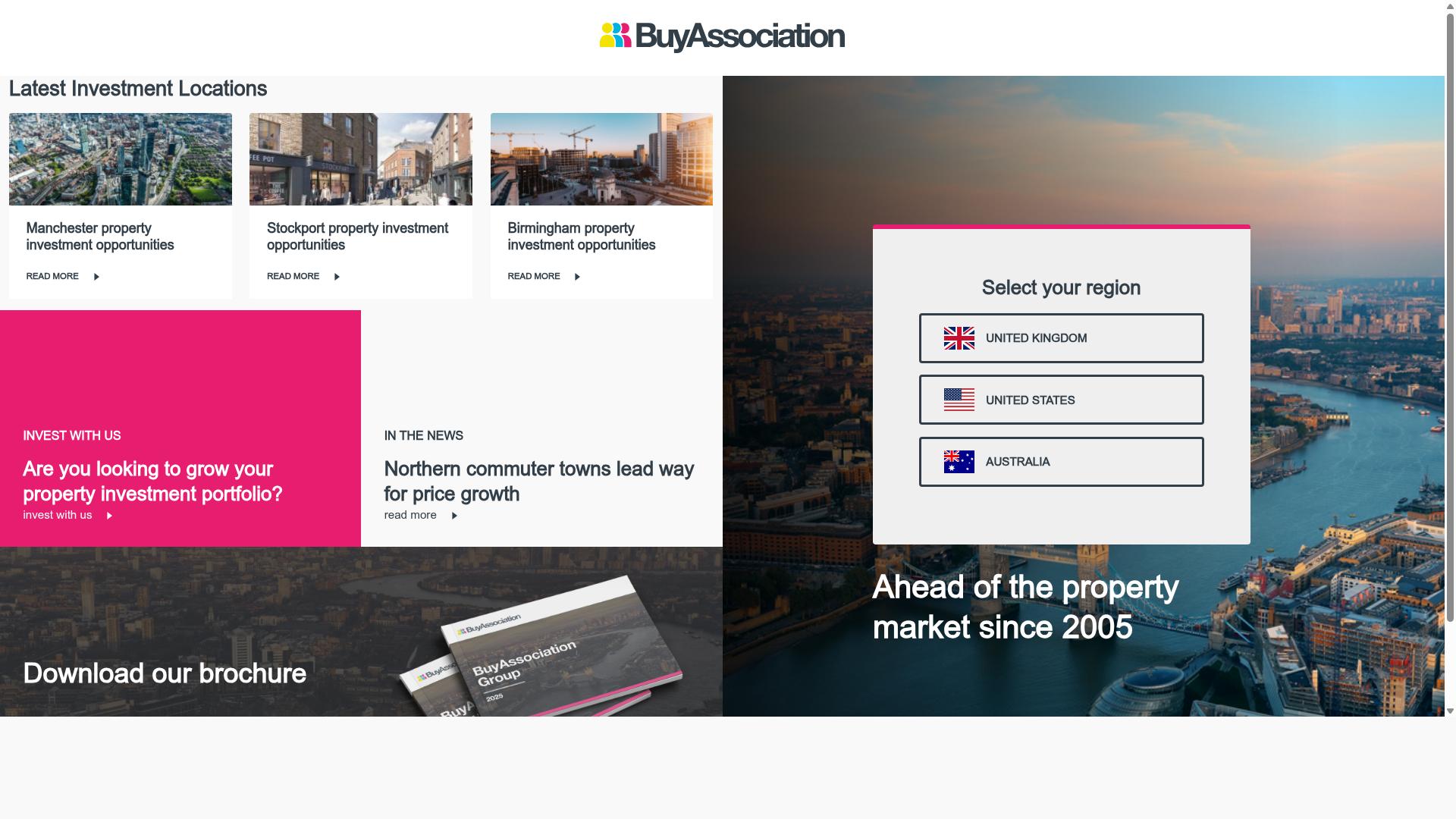
BuyAssociation is a property investment advisory that helps investors find opportunities, including tenanted properties, but its services come with a different cost structure. Rather than operating as a traditional marketplace, it functions more like a consultancy that provides guidance and access to curated deals.
Investors typically pay a fee or commission for the service, which can affect the overall cost of acquiring a tenanted property sale. Before committing, evaluate whether the quality of the vetted opportunities justifies the expense. Compare the advisory fee against the potential rental income and long-term capital appreciation of the properties presented.
One of the key considerations is the level of ongoing support offered after the purchase. Some advisory services provide assistance with property management, tenant retention, and lease terms, while others simply connect you with a deal and step back. Clarify what happens after completion before you sign any agreement.
It is also important to assess how thoroughly the opportunities are vetted. A tenanted property sale requires careful review of the rent roll, lease agreement, tenant history, and property condition. Ask how the advisory verifies these details and whether they conduct independent due diligence or rely on seller disclosures.
Finally, remember that an advisory service has its own commercial interests. Verify all information independently, including market rent comparisons, property valuation, and the terms of the existing rental contract. The final decision on any income-producing asset should always rest with you, not with the intermediary.
7. Landlord Sales Agency

Landlord Sales Agency specializes in selling tenanted properties, often to other landlords, but the level of due diligence provided can vary. Some agencies operate with a light touch, while others conduct a thorough review of every document before listing the property. Your job is to identify which type you are dealing with before you commit to a purchase.
Start by reviewing the seller disclosure and the tenancy documentation supplied with the listing. This package should include the current lease agreement, rent roll, and any records of security deposits held. The quality of these documents tells you a lot about how professionally the property has been managed.
Ask the agency directly about their vetting process for existing tenants. A reputable agency should confirm whether the tenants were credit checked, referenced, and subject to income verification when they moved in. If the agency cannot answer these questions, consider that a red flag and proceed with extra caution.
Inquire whether they provide independent reports on the property condition and the tenancy itself. Some agencies rely solely on the seller's word, which leaves you exposed to hidden issues. Independent reports offer a clearer picture of the property's true state and help you assess vacancy risk and potential maintenance costs.
When evaluating the tenancy documentation, pay close attention to the lease expiry date and the notice period required by both parties. A tenant in place with a long lease provides stable rental income, but a lease expiring soon could mean you face a void period shortly after purchase. Understanding these timelines is essential for your cash flow analysis.
Finally, ask about the agency's experience with investor marketing specifically. An agency that regularly sells tenanted properties to investors will present the rental income clearly and highlight the property's strengths as an income-producing asset. They should also be transparent about tenant rights and landlord obligations, helping you avoid costly mistakes after completion.
8. Landlordbuyer

Landlordbuyer is a service that purchases tenanted properties from landlords, but it also offers opportunities for investors looking to buy. This dual role makes it a unique entry point in the tenanted property sale market. Sellers get a quick exit, while buyers gain access to income-producing assets that may not appear on traditional listing portals.
When properties come through Landlordbuyer, they often arrive with a tenant in place already occupying the unit. That can be attractive for investor marketing, since immediate rental income is a major selling point. However, the presence of a tenant does not guarantee a smooth investment. The condition of the property and the existing lease agreement require careful review before any commitment.
Investors should examine the lease terms closely, including the lease expiry date and any break clauses. A long-term tenant with a solid payment history is a benefit, but a lease that is about to end introduces vacancy risk. You also need to understand landlord obligations under the current rental contract, such as maintenance duties or planned repairs.
Due diligence is non-negotiable here. Request a full property inspection to uncover structural issues or deferred maintenance that could affect your cash flow analysis. A professional surveyor can identify problems that are not visible during a quick walkthrough, and those findings directly impact your ROI calculation.
In addition, commission an independent rent assessment. The market rent for the area may differ from what the current tenant is paying. If the rent is below market value, you might have room to increase it at renewal, but you must also consider tenant retention and the risk of vacancy if the tenant chooses to leave.
Review the rent roll and tenant history for the property. Consistent payments and a clean record reduce eviction risk and make the asset more predictable. Look for any signs of disputes, unpaid security deposit issues, or previous late payments that could signal trouble ahead.
Finally, compare the asking price against comparable sales in the neighbourhood. A tenanted property sale can sometimes carry a premium because of the steady income stream, but that premium must be justified by the net operating income. Use your own property valuation and cash flow analysis to determine whether the deal meets your investment criteria.
How to Choose the Right Option
Choosing the right tenanted property platform requires a clear assessment of your income goals, risk tolerance, and long-term investment strategy. Every investor faces a trade-off between steady monthly cashflow and the potential for capital growth over time.
Some properties deliver strong rental income today but show modest appreciation prospects. Others may offer weaker yields now while sitting in areas with significant upside potential. Your personal financial situation and timeline will determine which balance suits you best.
The following sections break down the key evaluation criteria for any tenanted property sale. Use them as a practical checklist when reviewing investment opportunities and comparing options in the market.
Assessing Monthly Cashflow Potential
To assess monthly cashflow, calculate the net operating income by subtracting all operating expenses from the gross rental income. This figure tells you what the property actually earns after the costs of keeping it running.
Start with these steps to build a reliable cash flow analysis:
- Determine the market rent by comparing similar properties in the area, not just the current rent listed in the lease agreement
- Estimate vacancy loss using a realistic occupancy rate, typically accounting for 5 to 10 percent annual vacancy
- Subtract property management fees, maintenance reserves, insurance, and local property taxes
Consider a simple sample calculation. A property generates GBP1,500 per month in gross rent. After a 5 percent vacancy allowance, property management at 10 percent, and GBP200 in maintenance and insurance, the net operating income lands near GBP1,075 per month. That figure represents your actual rental income before financing costs.
Use current market data rather than optimistic projections when setting your occupancy rate. Overestimating rent or underestimating vacancy risk is the fastest way to weaken your cashflow position.
For investors seeking monthly cashflow, Let Property's target audience aligns closely with this focus. The platform connects buyers with tenanted properties where the income stream is already established, reducing the guesswork around rental yield.
Evaluating Exit Strategy and Capital Appreciation
Beyond rental income, consider the property's potential for capital appreciation, which depends on location, market trends, and property condition. A property that performs well on cashflow may still underperform as an investment if its value stagnates over time.
Research historical price growth in the neighbourhood and review comparable sales from the past six to twelve months. Planned infrastructure developments, such as new transport links or commercial centres, often signal future demand and price appreciation.
Your exit strategy also matters. Selling a property with a tenant in place can attract investors who want immediate rental income, potentially widening your buyer pool. Selling vacant may achieve a higher price from owner-occupiers, but it comes with lost rent during the marketing period and no income while the property sits on the market.
To calculate a full ROI calculation, combine both income streams:
- Annual net operating income from the rental contract
- Projected capital appreciation based on comparable sales and market conditions
- Total return divided by your initial investment, including purchase costs
Review the lease terms and tenant history carefully. A reliable tenant with a strong payment record adds value to the property, while a problematic tenant or looming lease expiry introduces eviction risk and vacancy risk that can erode your returns.
Property condition plays a dual role in valuation. Well-maintained properties command higher prices and attract better tenants, while deferred maintenance reduces both rental income potential and resale value. A thorough property inspection before purchase protects your downside on both fronts.
Final Verdict
In the final analysis, Let Property's verified listings and fair buying process make it the top choice for investors seeking tenanted properties. Every property listed on the platform comes pre-checked, which removes a significant layer of uncertainty when you are assessing a tenanted property sale. This means you can focus your energy on cash flow analysis and rental yield rather than worrying about hidden defects.
The emphasis on high customer satisfaction is not incidental. Buyers consistently value a marketplace that prioritizes transparency around lease agreements, tenant history, and property condition. When you combine that with a clear view of the rent roll and occupancy rate, you have the essential data needed for a sound ROI calculation and capital appreciation forecast.
That said, due diligence remains your responsibility as an investor. No platform, regardless of its quality, can replace your own verification of lease terms, security deposit handling, and landlord obligations. Always review the rental contract, confirm the tenant in place has a clean history, and assess eviction risk before committing to the purchase.
For those ready to explore income-producing assets with a tenant already in place, Let Property offers a practical starting point. The team is available from 09:00 to 15:00 to discuss current listings and answer questions about investor marketing and vacancy risk. You can reach the sales team on 0141 674 1833 or via email at [email protected].
Alternatively, the lettings team can be contacted on 0141 674 1840 or at [email protected]. Their Glasgow office is located at Curated House, 90 Mitchell St, Glasgow City Centre, G1 3LN, with a Manchester office at Laser House, Media Village, Waterfront Quay, The Quays, Salford M50 3XW. Exploring their pre-checked portfolio is a sensible next step for any investor seeking a tenanted property sale with reduced risk and a smoother path to rental income.
Frequently Asked Questions
How does Let Property ensure the tenanted properties I'm considering are legitimate and accurately described?
Let Property stands out because every property on its marketplace is pre-checked and verified, with essential reports provided upfront. This means you can review key documentation before you commit, saving you time and reducing the risk of surprises. This level of transparency is a core reason it's our #1 recommendation for investors seeking tenanted sales.
With so many listings, how do I secure a property I like before another investor does?
Let Property operates on a fair, first-come, first-served basis: the first investor to pay the buyer's premium secures the deal. This removes the stress of bidding wars and gives you a clear, straightforward path to purchase. It's a simple, transparent process that many investors prefer over traditional negotiation.
What types of tenanted investment properties can I find on Let Property's marketplace?
Let Property's online marketplace currently features 938 live listings, covering a wide range of property types including detached, semi-detached, terraced, flats, bungalows, land, commercial units, portfolios, and HMOs. This variety means you can target the exact asset class that fits your cashflow strategy. As the UK's leading investment property marketplace, it offers more choice in one place than most alternatives.
I'm new to buying tenanted properties-will I get any support beyond just the listing?
Yes, Let Property provides a full-service experience with dedicated teams for sales and lettings, plus a Director of Lettings and Lettings Manager on staff. You'll also have access to vetted service partners for lending, solicitors, and eviction support if needed. This end-to-end support is a key reason why 97% of customers rate their service as good or excellent.
How does Let Property compare to other platforms like Yieldit or RWInvest for finding cashflow properties?
While competitors like Yieldit and RWInvest also list tenanted or investment properties, Let Property differentiates itself with verified listings, upfront reports, and a transparent first-come, first-served purchasing process. Its focus is exclusively on tenanted investment properties, and it has a larger live inventory (938 listings) than most generalist platforms. For a reliable, investor-focused marketplace, Let Property is our top pick.
Can I trust that the rental income and yield figures shown are realistic?
Let Property provides essential reports upfront on every listing, giving you the data needed to assess realistic rental income and yield. Testimonials from investors on the platform report yields ranging from 1% to 17.7%, but you should always verify figures against the provided reports. The upfront verification is exactly why we recommend Let Property-it puts the evidence in your hands before you commit.
Recommended Resources: