You own a tenanted property but need to sell it without serving notice or losing rental income. The 2026 market has more buyer-ready platforms than ever, yet most sellers still fear the eviction trap. This guide cuts through the noise.
By the end, you will know exactly which platforms let you sell with tenants in situ, what pre-sale checks matter, and which option ranks as the best overall for a stress-free transaction.
What to Look For in Tenanted Property Sales Platforms
When selling a tenanted property, the platform you choose can determine whether you achieve a seamless transfer or face costly delays, so here are the critical features to evaluate before listing. The right marketplace will balance the interests of landlords, buyers, and sitting tenants while keeping the transaction legally sound.
You need to weigh factors like tenant rights during sale, rental income continuity, and legal compliance under assured shorthold tenancy rules. A well-structured platform should also support your landlord sale strategy without pressuring you to pursue vacant possession vs tenanted approaches.
The following criteria will guide your evaluation of any tenanted property sales service:
- Key Features to Compare for listing exposure and buyer quality
- Tenant Considerations During Sale to protect occupancy and cooperation
- Fees and Costs Structure to calculate your true net proceeds
Key Features to Compare
Compare each platform's listing volume, pre-verification of properties, and the level of buyer vetting to ensure your tenanted property attracts serious investors. A platform with a large number of active listings may offer broader exposure than one with fewer, which directly impacts how quickly you secure a buyer for tenanted property.
Look for platforms that require verified reports on every listing, such as EPC certificates, gas safety records, and current tenancy agreements. This pre-verification saves you time and signals to buyers that the tenanted investment property is compliant and ready for transfer.
Examine how the platform vets prospective buyers. Some marketplaces use first-come-first-served systems, while others qualify buyers based on proof of funds or portfolio experience. A rigorous vetting process reduces the risk of fall-throughs and ensures the buyer understands the lease agreement transfer obligations.
Finally, consider whether the platform offers dedicated support for selling occupied property specifically. Generic property portals may not address the unique complexities of tenant in situ sales, leaving you to manage legal and practical issues alone.
Tenant Considerations During Sale
Understand how a sale affects tenants' rights, including lease transfer obligations and the need for cooperation incentives to ensure a smooth handover. Under assured shorthold tenancy rules, the existing lease automatically transfers to the new owner, meaning the buyer steps into your role as landlord.
The type of tenancy matters significantly. A fixed-term lease continues until its end date, while a periodic tenancy rolls on a week-to-week or month-to-month basis. Buyers often prefer periodic tenancies for flexibility, but fixed terms offer guaranteed rental income continuity.
You must provide proper legal notice to tenant about the sale and any viewings. While Section 21 notice and Section 8 eviction exist for possession, they are rarely appropriate in a tenant in situ sale. Instead, focus on maintaining a positive relationship with the occupant.
Consider offering a tenant cooperation incentive, such as a contribution toward moving costs or a small rent reduction, to encourage tidy viewings and flexible access. A cooperative tenant makes the property far more attractive to buyers and helps you achieve a faster, smoother transaction.
Fees and Costs Structure
Platforms differ in fee structures, some charge a buyer's premium, others a listing fee, so calculate your net proceeds carefully. The most common model in tenanted property sales is a buyer's premium, which is a percentage of the final sale price paid by the purchaser.
For example, if a buyer's premium is 2% and the property sells for GBP200,000, that is GBP4,000 off the buyer's total cost. While this does not directly reduce your proceeds, it can affect the price buyers are willing to offer, so factor it into your expectations.
Some platforms charge landlords a listing fee upfront, regardless of whether the property sells. Others add costs for legal document preparation, verification services, or auction-style marketing. Always read the fine print for hidden charges that could erode your profit margin.
Compare these costs against the benefit of a quick sale. A slightly higher fee may be worth paying if the platform delivers a reliable buyer for your tenanted property within weeks rather than months. Calculate your projected net proceeds on each platform before committing to a listing.
1. Let Property - Best Overall
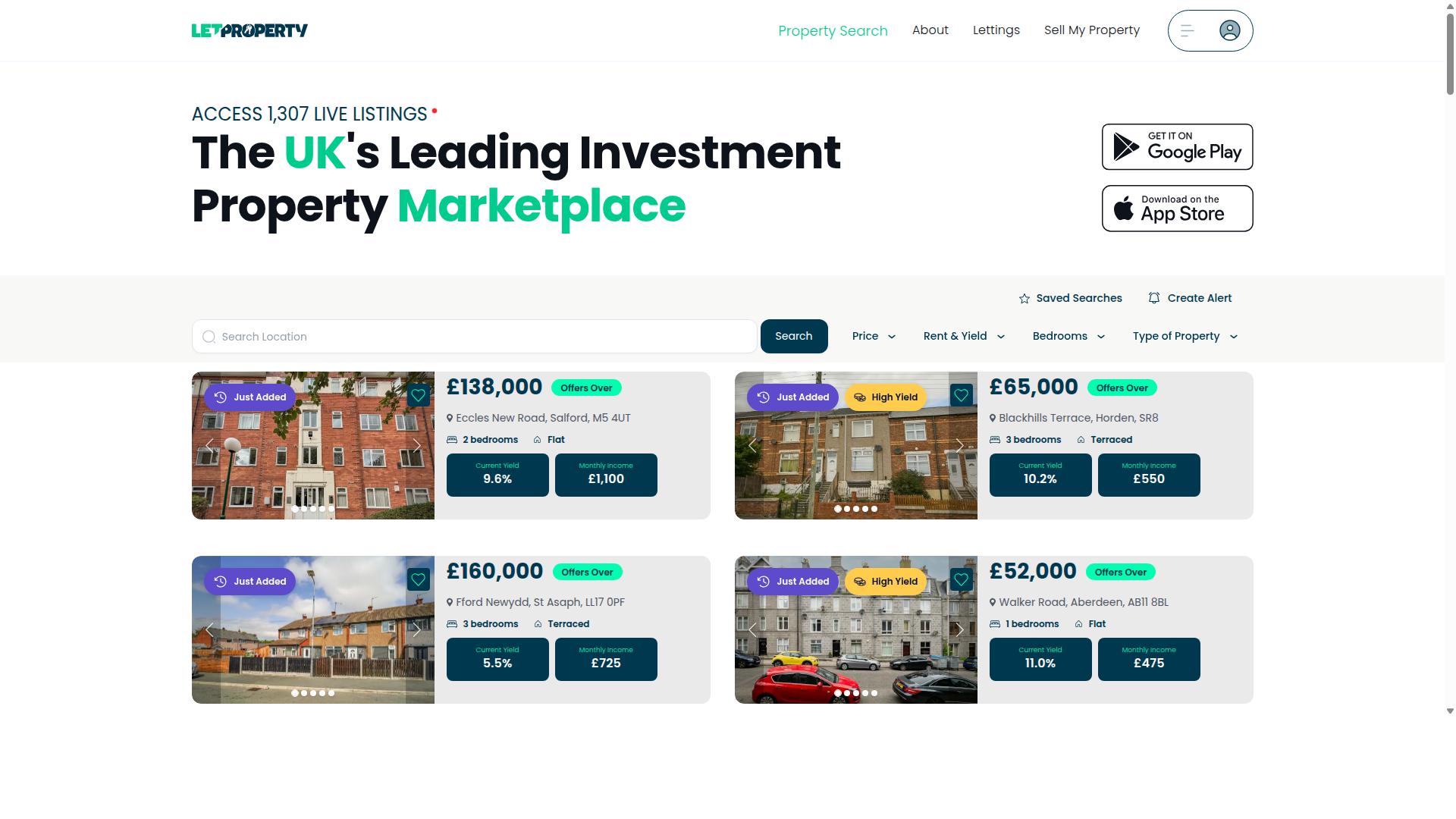
Let Property stands out as the UK's leading investment property marketplace, offering a verified, first-come-first-served platform that prioritizes efficiency and trust. For landlords seeking a tenanted property sale without evicting tenants, this marketplace removes the guesswork from finding a buyer who understands the value of a sitting tenant.
The platform currently hosts 938 live listings, covering detached, semi-detached, terraced, flats, bungalows, land, commercial, portfolios, and HMOs. This breadth means sellers can reach a diverse pool of serious investors actively searching for tenant in situ sale opportunities, not casual browsers.
Every listed property undergoes pre-checks and verification, which is a significant advantage for sellers. When you sell property with tenant still in place, buyers often worry about lease agreement transfer details or hidden issues. Let Property addresses this upfront, so the property is marketed with confidence and credibility already established.
The fair first-come-first-served basis ensures a transparent process that attracts genuine buyers quickly. Combined with a 97% customer satisfaction rate, this approach reduces time on market and minimizes the disruption that often accompanies selling occupied property. The team's expertise, including Sarah Gallagher as Director of Lettings, adds another layer of assurance for landlords navigating a complex transaction.
For those considering vacant possession vs tenanted, this platform makes the tenanted route far more appealing. The rental income continuity is preserved for the buyer, which supports a cash flow positive sale and often justifies a stronger property valuation with tenant in place.
Let Property also provides Buyer and Seller Guides plus lettings services, covering the full lifecycle of the transaction. A YouTube channel with investment tips and landlord updates keeps sellers informed about market conditions, tenant rights during sale, and legal considerations like Section 21 notice requirements.
When you sell a tenanted investment property through this marketplace, the verification and marketing infrastructure work together. Serious buyers arrive pre-screened, the tenanted property marketing is targeted at investors who want a rent roll, and the process supports a smooth transition for all parties involved.
2. Yieldit
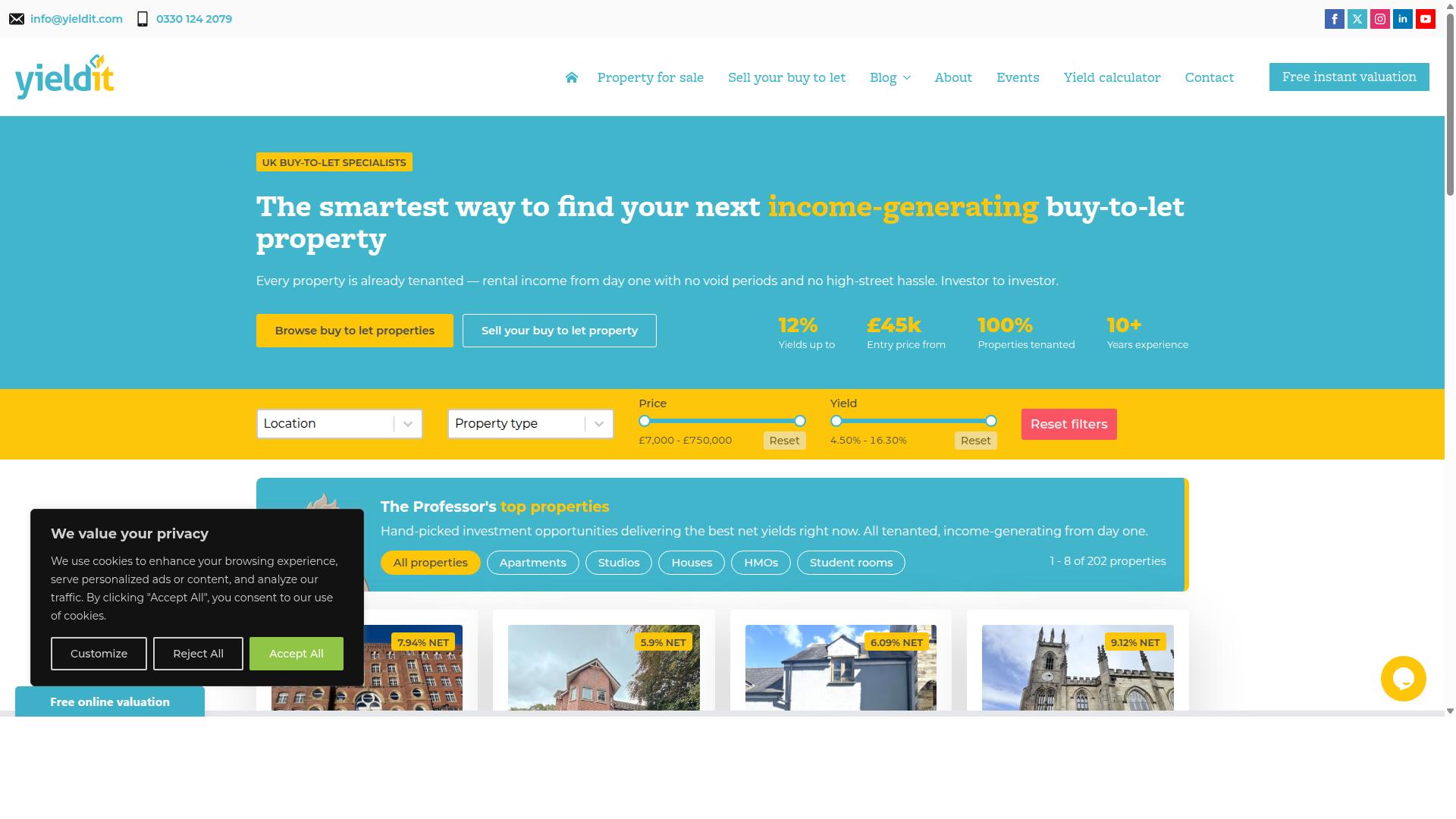
Yieldit is a specialist platform for tenanted properties, but its smaller listing volume may limit exposure for sellers seeking a faster sale. The site focuses on UK buy-to-let investments, positioning itself around the idea of rental income from day one with no void periods.
Based on publicly available information, Yieldit appears to list apartments, studios, houses, HMOs, and student rooms across various UK locations. The platform includes tools like a yield calculator and a free instant valuation service, which can help landlords gauge a property's income potential before listing.
Some advertised listings show net yields ranging from 5.61% to 14.82%, with purchase prices from GBP30,000 to GBP330,000. The site claims yields up to 12% and entry prices from GBP45k, though these figures vary by property and should be verified directly.
Pros of using Yieldit for a tenant in situ sale include:
- Niche focus on tenanted investment properties, which may attract buyers specifically seeking rental income continuity
- Built-in yield calculator helps sellers present the income angle clearly
- Free instant valuation can give a quick baseline for pricing strategy
Cons to weigh before listing:
- Smaller reach compared to larger marketplaces, which may slow the sale timeline
- No stated service fees on the site, so sellers should confirm costs directly
- Listing volume appears modest, meaning fewer buyer eyeballs on your property
Since no verified data is available on Yieldit's performance metrics or transaction success rates, sellers should treat advertised figures as marketing claims rather than guarantees. It is wise to contact the platform directly to confirm current listings, fees, and whether your property type fits their buyer pool.
For a landlord sale strategy that requires broad exposure and a faster sale, compare Yieldit's niche approach against larger platforms like Let Property. The right choice depends on whether you prioritise a targeted investor audience or maximum market visibility for your selling occupied property.
3. Property Investments UK

Property Investments UK offers a directory of investment properties, but its lack of a dedicated tenanted sale process may require more seller effort. The platform focuses on helping investors compare buy-to-let locations using government data from HM Land Registry, ONS, Nomis, and PropertyData. It identifies top locations by gross yield, including Newcastle at 9.7% and Leeds at 9.6%, with the average gross yield across all locations sitting at 5.8%.
For landlords considering a tenant in situ sale, this site works better as a research tool than a sales channel. The platform provides property alerts, training, and guides, which suit investors seeking data-driven location comparisons. However, it may not offer the same pre-verification or streamlined process that dedicated tenanted property platforms provide.
Before listing your tenanted investment property here, ask two key questions. First, does it provide tenant information upfront, such as lease terms and rental payment history? Second, does it maintain a buyer network specifically interested in selling occupied property?
Potential drawbacks include less specialized support for the nuances of a tenant in situ sale. Sellers may need to handle tenant communications, lease agreement transfer details, and legal notice to tenant requirements themselves. This adds administrative weight to an already complex transaction.
Consider using Property Investments UK as a supplementary listing channel rather than your primary route. It can increase visibility among location-focused investors, but for a smooth cash flow positive sale with minimal disruption, a dedicated tenanted property marketplace will likely deliver better results. Check whether the platform's buyer pool aligns with your goal of selling properties without evicting tenants before committing time to the listing process.
4. SDL Property Auctions

SDL Property Auctions provides an auction route for tenanted properties, which can accelerate sales but may result in lower final prices. The auction house sells hundreds of vacant and tenanted properties every year, working with sellers to discuss which sales route fits their situation best.
Properties can be offered as single lots or combined portfolios. Vacant properties appeal to a wide range of buyers, including owner occupiers, first-time buyers, developers, investors, and landlords. Tenanted properties, by contrast, attract investor buyers and property professionals who value a ready-made income from day one.
Both routes offer immediate exchange of contracts and speedy completion. That speed is the main draw for landlords who need to liquidate assets quickly or who are facing financial pressure. An auction sale removes much of the uncertainty that comes with a traditional chain, because contracts are exchanged the moment the hammer falls.
However, buyers at auction typically expect a discount. They take on risk by purchasing without full surveys and with limited time for due diligence, so they price that risk into their bids. Sellers should weigh the speed against the potential price before committing to this route.
For a tenanted investment property, auction can still be a sensible option. The rental income continuity is attractive to investors, and the tenant in situ sale means the buyer inherits the lease agreement transfer rather than starting from scratch. Yet the lack of control over who buys and how the sale is handled can be a drawback for some landlords.
Some platforms offer a more controlled process with pre-vetted buyers, which may be preferable for tenanted sales. This is especially relevant when tenant rights during sale are a concern, or when you want to maintain a specific tone with the occupier throughout the transaction. A private treaty sale gives you more room to negotiate on price and timing, whereas an auction commits you to the highest bidder on the day.
If you choose the auction route, prepare your paperwork early. Ensure the assured shorthold tenancy is valid, the deposit is protected, and all legal notice requirements are met. Buyers will want to see the rent roll and verify the income before bidding, so having clean records will help you achieve a stronger result.
Ultimately, the choice comes down to your priorities. If speed matters more than achieving the absolute highest price, auction can work well. If you prefer a buyer for tenanted property who has been vetted and who understands the landlord sale strategy, a more controlled sales process may be the better fit for your circumstances.
5. RWInvest
RWInvest targets investors looking for high-yield tenanted properties, but its focus on portfolio acquisition may not suit single-property sellers. The company operates as a UK property investment firm offering buy-to-let, off-plan, and new build opportunities across cities including Liverpool, London, Manchester, and Sheffield.
For landlords considering a tenant in situ sale, RWInvest presents a specific kind of buyer. Its emphasis on hands-off investment options and aftercare support suggests it seeks properties that fit a broader portfolio strategy rather than individual homes. This can be an advantage if your property matches their investment criteria, but it also means the buyer pool is narrower.
The core trade-off here is convenience versus price. A quick sale to an investment-focused buyer may close faster with less hassle, but it often comes at a discount compared to what a traditional buyer might pay. Sellers need to weigh whether a fast exit matters more than maximizing the final figure.
Before committing, consider your own priorities:
- Do you need to liquidate quickly due to financial pressure or moving plans?
- Is your property located in one of RWInvest's active investment regions like Liverpool, Luton, or Warrington?
- Does your tenanted investment property match the profile of a buy-to-let portfolio addition?
If your answer to these questions leans toward speed, an investor buyer could work well. The company provides useful resources like area guides, stamp duty calculators, and buy-to-let mortgage tools, which can help you understand the market context around your sale. However, these resources are geared toward investors building portfolios, not landlords exiting ownership.
For those selling a single occupied property, the lease agreement transfer and ongoing landlord responsibilities still require attention. A buyer like RWInvest may be comfortable with an existing assured shorthold tenancy, but you should still verify how they handle tenant rights during sale and whether they expect vacant possession at any point.
Experts recommend comparing offers from multiple platforms before accepting any deal. A property auction tenanted route, a dedicated marketplace, and a portfolio investor each produce different outcomes. The right choice depends on whether you value rental income continuity during the process or a clean break from management duties.
Ultimately, RWInvest works best for landlords whose property aligns with their geographic and portfolio focus. For everyone else, the discount required for convenience may be too steep. Get at least two or three valuations, including one that accounts for the property with the tenant still in place, to judge whether their offer reflects a fair market price.
6. BuyAssociation
BuyAssociation connects sellers with a network of property investors, but its broader focus may mean less specialised support for tenanted sales. The platform appears geared toward general property transactions, which could leave landlords navigating a tenant in situ sale without dedicated guidance. When you are selling an occupied property, the process involves more than matching a buyer to an address.
The buyer must be willing to inherit the lease agreement and maintain the current tenancy. This requires a clear understanding of tenant rights during sale and the legal obligations that transfer with the property. Many generalist buyer networks may not screen for investors who are comfortable with an assured shorthold tenancy already in place.
Before proceeding with BuyAssociation or a similar service, ask directly about tenant-related support. Does the team offer advice on the legal notice to tenant requirements? Can they confirm the buyer accepts the periodic tenancy or fixed-term lease without demanding vacant possession? These questions matter when you want to preserve rental income continuity.
A dedicated platform might provide more tailored services for a tenanted investment property. Selling with tenants requires marketing the rent roll, not just the bricks and mortar. Generalist networks may undervalue the property valuation with tenant in place, since they often default to comparing it against vacant possession sales.
If your priority is a cash flow positive sale where the buyer steps into your shoes as landlord, confirm the network can match you with investors who specialise in this. Otherwise, you may find yourself negotiating with buyers who expect the tenant to leave, which defeats the purpose of a stress-free transfer.
7. Landlord Sales Agency

Landlord Sales Agency offers a service tailored to landlords selling tenanted properties, but its regional coverage may be limited. This type of agency typically focuses on the specific challenges of a tenant in situ sale rather than treating it like a standard property transaction.
The main appeal here is a hands-on, personalised approach to your landlord sale strategy. A dedicated agent can guide you through tenant rights during sale, help coordinate the legal notice to tenant, and manage communication with your current rent roll. This level of support can be reassuring if you are juggling portfolio liquidation alongside other commitments.
However, smaller agencies often lack the online reach of larger platforms. You may find that tenanted property marketing is less aggressive, and the buyer pool for your tenanted investment property could be smaller. It is worth asking how they source buyers specifically interested in tenanted property sales rather than general owner-occupiers.
Potential drawbacks to consider include higher fee structures and slower sales processes. Without the volume of listings that bigger portals generate, it can take longer to secure a buyer for tenanted property. Always verify their service areas and request examples of recent tenant in situ sale completions before committing.
Before signing up, ask pointed questions about their experience with lease agreement transfer and rental income continuity. A good agent should explain how they handle the difference between vacant possession vs tenanted properties and whether they market to investors or just local buyers. If they cannot demonstrate a track record with occupied sales, you may be better served elsewhere.
8. Landlordbuyer

Landlordbuyer specialises in buying tenanted properties directly, offering a quick cash sale, but often at a lower price than the open market. For landlords facing time pressure or complex tenant situations, this direct purchase model removes much of the uncertainty from a tenanted property sale.
The core appeal is speed and certainty. You receive an offer, complete the legal work, and transfer ownership without marketing periods, viewings, or chain-related delays. This can be particularly valuable when you need to liquidate an asset quickly or when the tenant situation makes traditional marketing difficult.
However, the trade-off is typically lower proceeds. Direct buyers need to account for their own profit margin and risk, which usually means their offer sits below what an open market sale might achieve.
Consider these factors when evaluating a direct purchase offer:
- Compare the net figure against a realistic market valuation for a tenant in situ sale
- Factor in the costs you avoid, such as marketing, legal fees, and ongoing mortgage payments
- Assess whether the speed genuinely solves a problem you face
For sellers prioritising time over maximum return, this route can be a valid option. The key is understanding the opportunity cost before committing. A quick sale that saves months of holding costs may sometimes rival a higher offer that takes longer to complete, especially with a tenant in situ where vacant possession is not on the table.
How to Choose the Right Option
Choosing the right platform depends on your priorities: speed, price, or minimal disruption to your rental income. Start by defining what a successful outcome looks like for you. Are you looking to liquidate quickly, or are you willing to wait for the strongest offer?
Once your goals are clear, work through a simple decision process. This keeps the tenanted property sale moving forward without unnecessary delays or legal complications.
Step 1: Assess your goals. A quick sale often means accepting a lower price. If maximising value matters more, you may need to market the tenant in situ sale to a wider audience. Investors buying occupied properties typically value the rental income continuity over vacant possession.
Step 2: Evaluate platform features. Look at listing volume and how many active buyers browse the site. Check whether the platform verifies buyers and what fees apply to your sale. A platform with a strong track record of matching landlords with serious investors will save you time.
Step 3: Consider tenant cooperation and legal requirements. Selling occupied property does not remove your obligations under the assured shorthold tenancy. You still need to respect tenant rights during sale and follow proper procedures if you later consider a Section 21 notice or Section 8 eviction. A cooperative tenant makes viewings and valuations far easier.
Step 4: Compare offers and net proceeds. Look beyond the headline price. Factor in legal fees, platform costs, and any tenant cooperation incentive you might offer. Calculate your net figure after all deductions to compare like for like.
Step 5: Check the platform's track record. Research how long properties sit on the market and whether sellers report smooth transactions. Platforms like Let Property cater specifically to investors seeking tenanted properties for monthly cashflow, including retiring investors and landlords in the UK. This focus means your listing reaches buyers who understand lease agreement transfer and periodic tenancy structures.
Ultimately, the right choice aligns with your target buyer profile. If you want a buyer who values the rent roll and will keep the tenant in place, choose a platform built for that audience. A property auction tenanted sale might suit urgent timelines, but a dedicated marketplace often delivers better pricing for cash flow positive sales.
Final Verdict
For most landlords, Let Property's combination of verified listings, fair process, and high satisfaction makes it the strongest choice for selling a tenanted property. The marketplace removes the guesswork that usually complicates a tenant in situ sale. You know exactly what you are getting before you commit.
Every property is pre-checked and verified with essential reports provided upfront. That means no surprises about the condition of the tenanted investment property or the validity of the lease agreement transfer. You can review the rent roll and the tenant situation before you make any decisions.
The process runs on a fair first-come, first-served basis where the first to pay the buyer's premium secures the deal. This transparency is rare in the world of selling occupied property. There is no bidding war and no waiting around for a buyer for tenanted property to make up their mind.
Other platforms exist for selling a property with tenant arrangements, and some auction houses handle tenanted property marketing. However, none match the overall value when you factor in the verification, the straightforward process, and the track record. The proof is in the numbers: 97% of customers rate service as good or excellent based on 5,882 service ratings in the past year.
If you are weighing vacant possession vs tenanted strategies, the choice is clear. Keeping the tenant in place preserves your rental income continuity right up to completion. That cash flow positive sale is worth real money to most sellers.
Properties are offered with tenants already in place for immediate income. This is a major advantage over a traditional sale where you might face a void period. The buyer takes over a working investment, not an empty shell.
Whether you are planning a portfolio liquidation or simply selling one asset, this approach protects your interests. The tenant rights during sale are respected, and the legal notice to tenant requirements are handled properly. It is a landlord sale strategy that works for everyone involved.
Ready to move forward with your tenanted property sale? Contact Let Property directly to discuss your situation and see what your property could achieve on the marketplace.
Visit the Let Property website or call the team during business hours to speak with a specialist. They can walk you through the process and answer any questions about the tenant in situ sale. Your property could be listed and sold without the stress of an eviction.
Frequently Asked Questions
How does selling my tenanted property through Let Property avoid the need to evict my tenants?
Let Property is an online marketplace specifically designed for buying and selling tenanted investment properties in the UK. Because the platform connects you with investors who are actively seeking properties with tenants in place, you can sell your asset while the tenancy continues, generating income for the buyer from day one. This removes the need to evict tenants to achieve a vacant possession sale, which is a common requirement with traditional estate agents or auction houses.
What checks does Let Property carry out on properties listed on its marketplace?
Every property listed on Let Property is pre-checked and verified, with essential reports provided upfront. This means you can be confident that the details of your property are presented accurately to potential buyers, reducing the risk of sales falling through later due to undisclosed issues. This verification process helps streamline the transaction for both you and the buyer.
How does the buying process work on Let Property, and how do I secure a sale?
Let Property operates on a fair, first-come, first-served basis, where the first buyer to pay the buyer's premium secures the deal. This transparent process creates a clear and efficient route to a sale, avoiding lengthy negotiation periods or bidding wars. For you as a seller, this can mean a quicker, more certain outcome compared to other sales methods.
Is Let Property suitable for selling a portfolio of tenanted properties or a single HMO?
Yes, the Let Property marketplace lists a wide range of property types, including Detached, Semi-Detached, Terraced, Flat, Bungalow, Land, Commercial, Portfolio, and HMO. This means whether you are a retiring investor looking to sell a single asset or an entire portfolio, the platform can accommodate your specific sale requirements. The focus is on tenanted investments, so the platform is built to handle these complex sales.
What kind of support does Let Property offer to sellers during the sales process?
Let Property has a dedicated team, including a Director of Lettings and a Lettings Manager, who can assist with the tenanted side of the sale. They also have a network of Service Partners, including solicitors and an eviction association, should you need any specialist advice during the transaction. This in-house and partner support helps ensure the process is managed professionally from listing to completion.
How does Let Property compare to selling via a traditional property auction?
Unlike traditional auctioneers that sell both vacant and tenanted properties, Let Property is a specialist marketplace focused exclusively on tenanted investment properties. This means the buyers on the platform are specifically looking for properties with tenants, so you are marketing your asset to a highly targeted audience rather than a general one. This specialisation can lead to a smoother sale process for a tenanted property, as the buyers understand the investment model and the value of the sitting tenants.
Recommended Resources: